
Booth Formats
Backwall & Backdrop Displays in Savannah
The backwall is the one part of almost every booth format that has to work whether the exhibitor spent a little or a lot, which makes it worth planning first, not last.
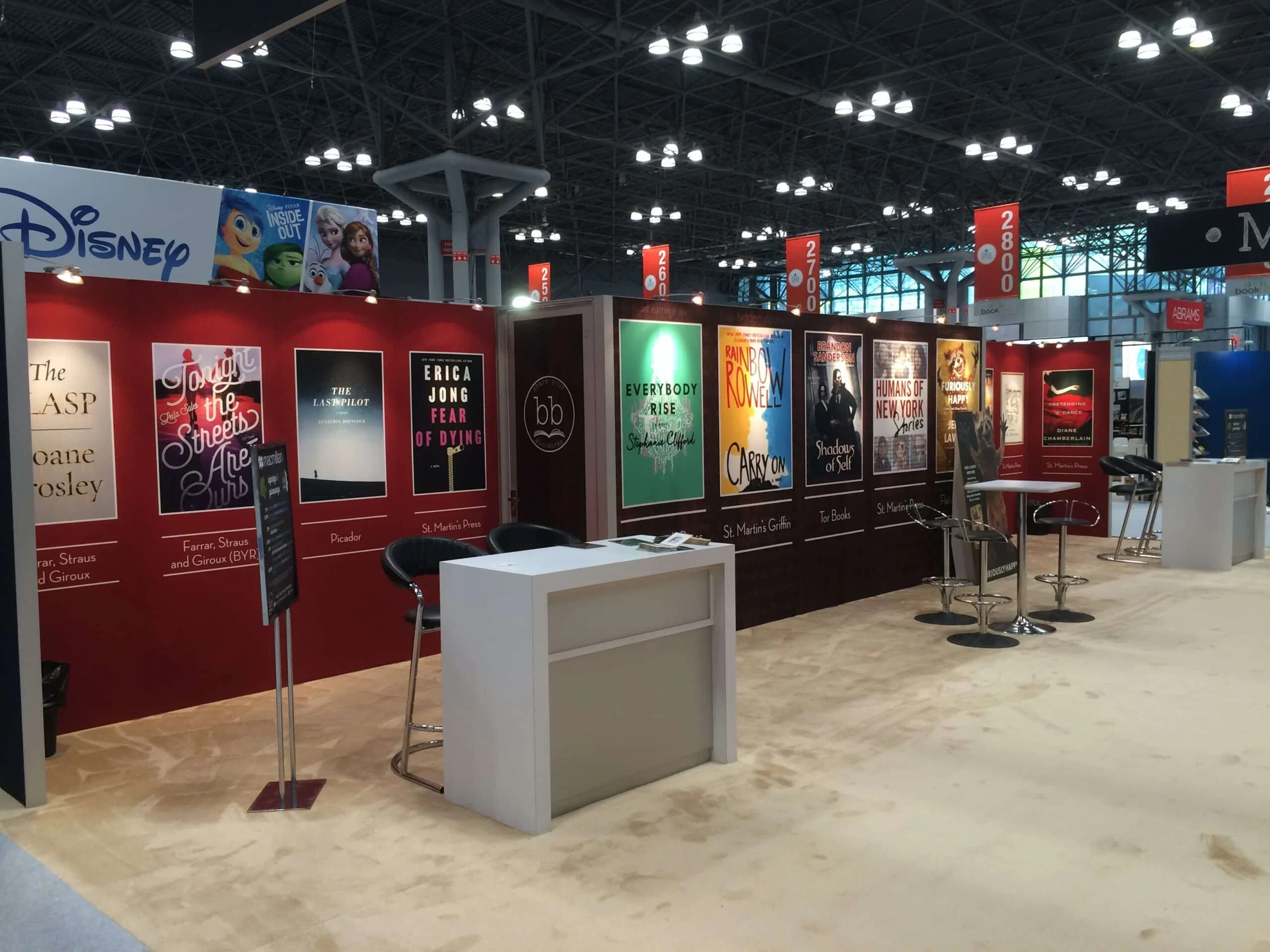
Whether it sits behind an inline booth, a table-top setup, or serves as the entire presence at a small sponsorship spot, a backwall or backdrop display is usually the single graphic that carries the most communication weight in the shortest glance.
Attendees moving down a Savannah Convention Center aisle, or past a sponsor row in a hotel foyer, read the backwall before anything else on the table or floor in front of it.
That makes lighting, height, and graphic durability worth getting right even when the rest of the booth is modest.
This page covers what makes a backwall or backdrop display actually hold up on a Savannah-area show floor.
Height is read before anything else
A backwall that clears the average neighboring booth height gets seen from further down the aisle, and that extra visibility is often worth more to overall booth traffic than any single design choice made on the graphic itself.
Lighting against a bright hall
The Savannah Convention Center's exhibit hall lighting is generally bright and even, which can wash out a backdrop that relies on subtle contrast, so graphics designed with bolder contrast and simpler color blocking tend to hold up better under standard hall lighting than fine-detail artwork.
Material choice for coastal storage
A fabric-tensioned backwall generally resists the wrinkling and adhesive failure that a printed vinyl panel can develop after repeated storage in the region's humidity, which matters for any exhibitor keeping the same backdrop across several shows a year.
Stability depends on the venue, not only the frame
A backdrop stand rated for a still indoor hall may need a heavier base or additional rigging at a venue with more open air movement, such as a foyer near an entrance, so the stand's stability rating should be checked against the actual venue rather than assumed universal.
Getting the backwall right first
Because the backwall usually carries the most weight of any single graphic in the booth, it is worth finalizing that piece before spending remaining budget on secondary elements like counters or literature stands.
Seams and panel joins at a distance
A multi-panel backwall's seams are often invisible up close but can create a faint line down the middle of the graphic when viewed from the aisle, so reviewing a full-scale proof, not only a small printed sample, catches alignment issues before the final print run.
Reusing a backwall across different booth formats
A backwall built to work behind an inline booth does not automatically translate to a peninsula's shared wall or a table-top riser, so exhibitors planning to reuse the same graphic across formats should design the artwork with those different mounting widths in mind from the start.
Mounting hardware and repeated setup
Grommets, magnetic strips, and silicone edge tracks all wear differently across repeated setup cycles, and a backwall that will travel to several Savannah-area shows in a season benefits from a mounting system rated for that reuse rather than a lighter option meant for a single install.
Color accuracy across print runs
A backwall reprinted for a later show should be checked against the original file's exact color values rather than reprinted from a saved proof photo, since small color drift between print runs becomes noticeable once an exhibitor has attendees comparing a newer panel to an older one side by side.
Keeping the original print file on record, rather than a scanned copy of the finished panel, is the simplest way to avoid that drift over a multi-show season.
Questions about backwall and backdrop displays
How tall should a backwall display be?
Tall enough to clear neighboring booth heights so it reads from down the aisle, which varies by show but is worth checking against the floor plan.
Does hall lighting affect backdrop design?
Yes, bright even lighting inside a convention hall can wash out subtle contrast, so bolder color blocking tends to hold up better.
Is fabric or vinyl better for a reused backdrop here?
Fabric-tensioned graphics generally resist humidity-related wrinkling and adhesive failure better than printed vinyl panels across repeated storage.
Do backdrop stands need extra stability outdoors or near entrances?
Often yes, since open air movement at a foyer or entrance can affect a stand rated only for a still indoor hall.
Can seams show on a multi-panel backwall?
They can from a distance, which is why reviewing a full-scale proof before the final print run is worth the extra step.
Plan a backwall display for a Savannah booth
Send the booth format and the venue. We will size the backwall height and match the material to the storage plan.