
Booth Formats
Inline Booth Displays in Savannah
An inline booth lives inside a row of neighbors on either side, so the whole plan comes down to what happens at eye level along that ten-foot run.
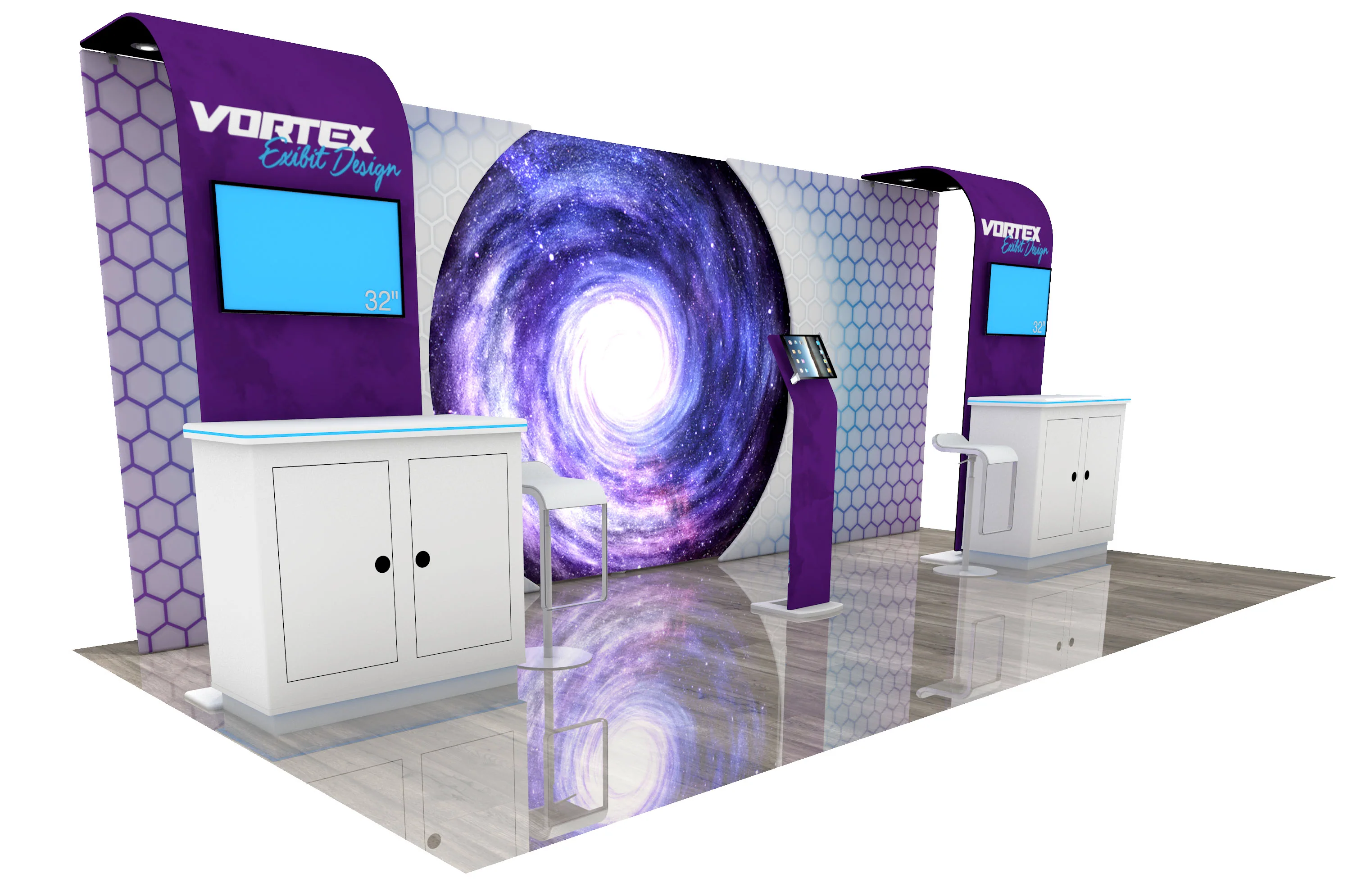
Most exhibitors who show at the Savannah Convention Center on Hutchinson Island end up in a straight aisle run at some point, because it is still the most common footprint sold on any floor plan.
An inline booth only faces one direction, which sounds like a limitation until you plan for it deliberately.
The back wall, the header graphic, and the counter placement carry almost all of the communication load, since there is no side or rear approach to lean on.
This page covers what actually changes an inline result: graphic height, aisle sightlines, and how the format performs across a convention center hall versus a hotel ballroom.
Reading the aisle before the graphic
In a convention center hall, an inline booth is read from thirty or forty feet away before an attendee ever slows down, so the header and the top third of the back wall are doing more work than anything at table height.
In a hotel ballroom setup, aisles run shorter and tighter, which changes how much distance the graphic actually has to travel.
Freight and the load-in window
Hutchinson Island access means most exhibitors are trucking in from I-95 or I-16 and queuing for a dock or marshalling yard assignment rather than pulling straight up to the hall door.
An inline booth in a crate or two moves through that queue faster than a large island build, which matters when the load-in window is short.
Humidity and material choice
Coastal Georgia carries enough humidity for most of the year that fabric graphics, adhesive-backed vinyl, and unfinished wood laminate all behave differently than they would inland.
Panels that were fine in a dry warehouse can cup or the seams can show after a week in a truck during the warmer months, so material selection is not purely cosmetic here.
What a repeat exhibitor should keep
An exhibitor who returns to the same regional shows season after season should keep a record of what graphic height actually read from the aisle, not only what looked right on a screen.
That note travels better than the booth itself.
Where inline stops being the right call
Once a company needs a hands-on demo station, private meeting space, or a four-sided presence for a headline sponsorship, the single-facing inline format runs out of room, and that is the point to look at peninsula or island footprints instead.
Lighting an inline run without overspending
A single well-placed spotlight or a header-mounted light bar usually does more for an inline booth's visibility than a full rig, since the format's narrow depth limits how much lighting equipment can sit on the floor without crowding the counter.
Exhibitors on a tighter budget can prioritize one strong light over the header rather than spreading a smaller lighting budget across the whole run.
Comparing inline to a peninsula upgrade
An exhibitor deciding between staying inline and upgrading to a peninsula slot should weigh the added cost against how much of the current booth's traffic already comes from a single direction, since a peninsula only pays off once foot traffic genuinely arrives from more than one aisle.
Counter placement inside a ten-foot run
A counter set flush against the back wall leaves the most open floor for conversation, while a counter angled slightly toward the aisle can slow attendee foot traffic just enough to invite a glance at the graphic, and either choice depends more on staff count than on style preference.
Questions about inline booth displays
How wide is a standard inline booth?
Ten feet is the most common width sold on Savannah-area show floors, with the depth usually running eight to ten feet back from the aisle.
Does an inline booth work in a hotel ballroom, not only a convention hall?
Yes, though the aisle is usually shorter, so the graphic does not need to be read from as far away as it would inside the Savannah Convention Center.
What causes graphics to fail early in this market?
Humidity is the most common cause locally, particularly for exhibitors storing crates between shows without climate control.
When should an inline format be dropped for something bigger?
Once the booth needs a demo counter, a private conversation area, and open sightlines from more than one aisle, a corner or island footprint usually serves the goal better.
Is special lighting needed for a ten-foot inline booth?
Not usually a full rig; a single strong light over the header often outperforms several smaller fixtures spread across the run.
Scope an inline booth for your next Savannah show
Send the floor plan and the aisle assignment. We will size the header graphic and the freight count before the booth ships.